Blog
What Is Idiopathic Congenital Clubfoot?

Idiopathic congenital clubfoot is a structural deformity present at birth in which a baby’s foot is twisted inward and downward due to abnormal development of bones, tendons, and muscles. The exact cause is not fully understood, although genetics and fetal positioning may play a role. The Ponseti method is the most effective treatment and involves gentle manipulation and casting to gradually correct the foot position, followed by bracing to maintain alignment. A podiatrist experienced in pediatric care can guide families through each stage of correction, monitor progress, and provide long-term support to ensure proper foot function. If your child has been diagnosed with clubfoot, it is strongly suggested that you are under the care of a podiatrist for expert evaluation and early corrective care.
Congenital foot problems require immediate attention to avoid future complications. If you have any concerns, contact Ross Limon, DPM of Boca Deerfield Footcare Center. Our doctor can provide the care you need to keep you pain-free and on your feet.
Congenital foot problems are deformities affecting the feet, toes, and/or ankles that children are born with. Some of these conditions have a genetic cause while others just happen. Some specific foot ailments that children may be born with include clubfeet, polydactyly/macrodactyly, and cleft foot. There are several other foot anomalies that can occur congenitally. What all of these conditions have in common is that a child may experience difficulty walking or performing everyday activities, as well as trouble finding footwear that fits their foot deformity. Some of these conditions are more serious than others. Consulting with a podiatrist as early as possible will help in properly diagnosing a child’s foot condition while getting the necessary treatment underway.
What are Causes of Congenital Foot Problem?
A congenital foot problem is one that happens to a child at birth. These conditions can be caused by a genetic predisposition, developmental or positional abnormalities during gestation, or with no known cause.
What are Symptoms of Congenital Foot Problems?
Symptoms vary by the congenital condition. Symptoms may consist of the following:
- Clubfoot, where tendons are shortened, bones are shaped differently, and the Achilles tendon is tight, causing the foot to point in and down. It is also possible for the soles of the feet to face each other.
- Polydactyly, which usually consists of a nubbin or small lump of tissue without a bone, a toe that is partially formed but has no joints, or an extra toe.
- Vertical talus, where the talus bone forms in the wrong position causing other bones in the foot to line up improperly, the front of the foot to point up, and the bottom of the foot to stiffen, with no arch, and to curve out.
- Tarsal coalition, when there is an abnormal connection of two or more bones in the foot leading to severe, rigid flatfoot.
- Cleft foot, where there are missing toes, a V-shaped cleft, and other anatomical differences.
- Macrodactyly, when the toes are abnormally large due to overgrowth of the underlying bone or soft tissue.
Treatment and Prevention
While there is nothing one can do to prevent congenital foot problems, raising awareness and receiving neonatal screenings are important. Early detection by taking your child to a podiatrist leads to the best outcome possible.
If you have any questions, please feel free to contact our office located in Deerfield Beach, FL . We offer the newest diagnostic and treatment technologies for all your foot care needs.
Restoring Comfort and Function Through Bunion Surgery

Bunions are bony bumps that form at the base of the big toe, often caused by genetics, improper footwear, arthritis, or abnormal foot mechanics. They may look like a bump on the side of the foot, and the area can be red, swollen, or callused from friction. Many individuals experience severe pain, difficulty wearing shoes, and decreased activity levels due to discomfort while walking or standing. Bunions affect women more frequently than men, partly due to high-heeled or narrow shoes that place additional pressure on the joint. A podiatrist can start by evaluating the severity of the bunion, assessing foot structure, and discussing nonsurgical options, such as orthotics, padding, or footwear modifications. When conservative measures are insufficient, surgical correction may be recommended to realign the joint and relieve pain. Post surgery, a structured recovery plan and targeted exercises support optimal healing and restored mobility. If bunion pain limits your daily activities, it is suggested that you make an appointment with a podiatrist.
If you are suffering from bunion pain, contact Ross Limon, DPM of Boca Deerfield Footcare Center. Our doctor can provide the care you need to keep you pain-free and on your feet.
What Is a Bunion?
Bunions are painful bony bumps that usually develop on the inside of the foot at the joint of the big toe. As the deformity increases over time, it may become painful to walk and wear shoes. Women are more likely to exacerbate existing bunions since they often wear tight, narrow shoes that shift their toes together. Bunion pain can be relieved by wearing wider shoes with enough room for the toes.
Causes
- Genetics – some people inherit feet that are more prone to bunion development
- Inflammatory Conditions - rheumatoid arthritis and polio may cause bunion development
Symptoms
- Redness and inflammation
- Pain and tenderness
- Callus or corns on the bump
- Restricted motion in the big toe
In order to diagnose your bunion, your podiatrist may ask about your medical history, symptoms, and general health. Your doctor might also order an x-ray to take a closer look at your feet. Nonsurgical treatment options include orthotics, padding, icing, changes in footwear, and medication. If nonsurgical treatments don’t alleviate your bunion pain, surgery may be necessary.
If you have any questions, please feel free to contact our office located in Deerfield Beach, FL . We offer the newest diagnostic and treatment technologies for all your foot care needs.
Causes of Pain in Front of the Ankle

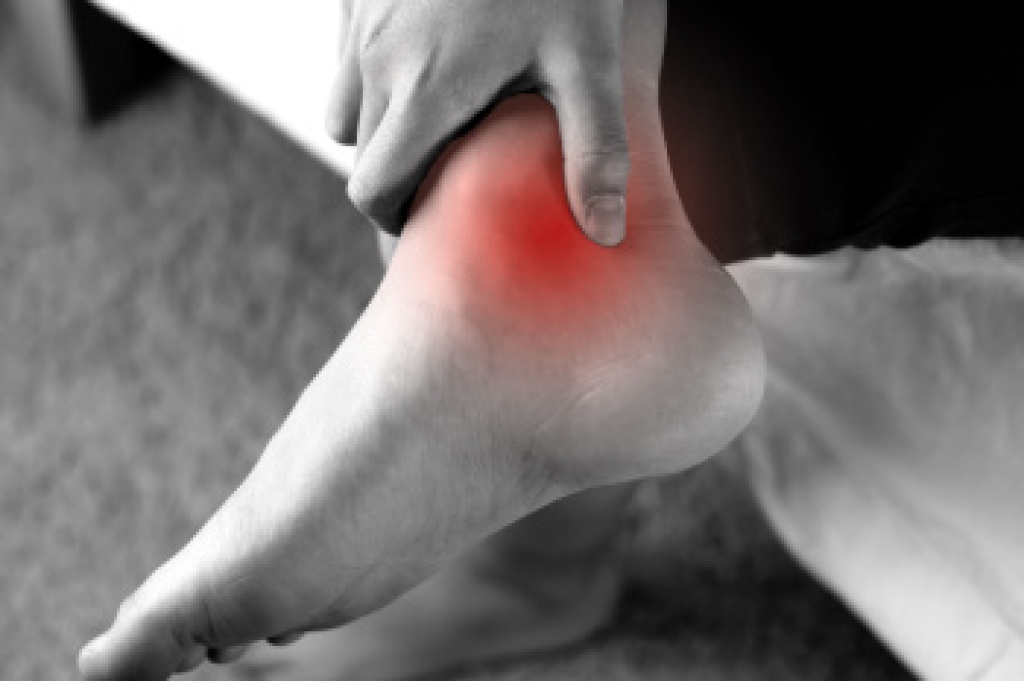
Anterior tibialis tendonitis occurs when the tendon that runs along the front of the ankle becomes irritated or inflamed from overuse or strain. This tendon connects the front of the shin to the top of the foot and is responsible for lifting the foot during walking. Repetitive running, jumping, or walking uphill can place excessive stress on this tendon. Wearing shoes that lack adequate support or are too tight can also increase tension in this area. People with flat feet, high arches, or muscle weakness in the lower leg are at higher risk of developing this condition. Symptoms include pain along the front of the ankle or top of the foot, swelling, and stiffness that worsens with movement. A podiatrist can help by examining the foot, ordering imaging, and recommending proper treatment. If you have pain in front of the ankle, it is suggested that you make an appointment with a podiatrist for a diagnosis and treatment.
Ankle pain can be caused by a number of problems and may be potentially serious. If you have ankle pain, consult with Ross Limon, DPM from Boca Deerfield Footcare Center. Our doctor will assess your condition and provide you with quality foot and ankle treatment.
Ankle pain is any condition that causes pain in the ankle. Due to the fact that the ankle consists of tendons, muscles, bones, and ligaments, ankle pain can come from a number of different conditions.
Causes
The most common causes of ankle pain include:
- Types of arthritis (rheumatoid, osteoarthritis, and gout)
- Ankle sprains
- Broken ankles
- Achilles tendonitis
- Achilles tendon rupture
- Stress fractures
- Bursitis
- Tarsal tunnel syndrome
- Plantar fasciitis
Symptoms
Symptoms of ankle injury vary based upon the condition. Pain may include general pain and discomfort, swelling, aching, redness, bruising, burning or stabbing sensations, and/or loss of sensation.
Diagnosis
Due to the wide variety of potential causes of ankle pain, podiatrists will utilize a number of different methods to properly diagnose ankle pain. This can include asking for personal and family medical histories and of any recent injuries. Further diagnosis may include sensation tests, a physical examination, and potentially x-rays or other imaging tests.
Treatment
Just as the range of causes varies widely, so do treatments. Some more common treatments are rest, ice packs, keeping pressure off the foot, orthotics and braces, medication for inflammation and pain, and surgery.
If you have any questions please feel free to contact our office located in Deerfield Beach, FL . We offer the newest diagnostic tools and technology to treat your foot and ankle needs.
Common Foot Injuries in Runners

Running places repeated stress on the feet, and even small imbalances can lead to injury. Among the most frequent issues runners face are plantar fasciitis, metatarsal stress fractures, Morton’s neuroma, and tendon irritation around the ankle. Plantar fasciitis involves inflammation of the thick band of tissue on the bottom of the foot, while stress fractures occur when tiny cracks form in the metatarsal bones from repetitive impact. Morton’s neuroma causes pain between the toes from nerve irritation, and tendon problems such as peroneal or posterior tibial tendinitis can develop from overuse or improper footwear. A podiatrist can help by evaluating gait, ordering imaging studies such as X-rays, prescribing orthotics, or recommending footwear that provides proper structure and alignment. In severe cases, surgery might be required to repair damage or stabilize the foot. If you have incurred a foot injury while running, it is suggested that you make an appointment with a podiatrist for a diagnosis and treatment.
All runners should take extra precaution when trying to avoid injury. If you have any concerns about your feet, contact Ross Limon, DPM of Boca Deerfield Footcare Center. Our doctor will treat your foot and ankle needs.
How to Prevent Running Injuries
There are a lot of mistakes a runner can make prior to a workout that can induce injury. A lot of athletes tend to overstretch before running, instead of saving those workouts for a post-run routine. Deep lunges and hand-to-toe hamstring pulls should be performed after a workout instead of during a warmup. Another common mistake is jumping into an intense routine before your body is physically prepared for it. You should try to ease your way into long-distance running instead of forcing yourself to rush into it.
More Tips for Preventing Injury
- Incorporate Strength Training into Workouts - This will help improve the body’s overall athleticism
- Improve and Maintain Your Flexibility – Stretching everyday will help improve overall performance
- “Warm Up” Before Running and “Cool Down” Afterward – A warm up of 5-10 minutes helps get rid of lactic acid in the muscles and prevents delayed muscle soreness
- Cross-Training is Crucial
- Wear Proper Running Shoes
- Have a Formal Gait Analysis – Poor biomechanics can easily cause injury
If you have any questions, please feel free to contact our office located in Deerfield Beach, FL . We offer the newest diagnostic and treatment technologies for all your foot care needs.